
Daniel Brooks
Crypto expert turning complex theory into clear guides.
What Is a Withdrawal Address
Table of Contents
We're continuing crypto terminology, and today we focus on the withdrawal address. This is the same as a crypto wallet address—a unique identifier used to transfer crypto from your wallet to another. What the withdrawal address looks like, how to find it, and how to share it—we discuss in this article.
Determining the Withdrawal Address
A withdrawal address is a specific identity number provided by the recipient (or your own external wallet) where funds are sent from an exchange or wallet. If you need to get a withdrawal address, open the wallet app on your phone or visit the website and look up the address for the network you plan to use for the withdrawal.
Let's look closer at what a withdrawal address is and how it may look, using Bitcoin and USDT as the most in-demand assets as examples.
Bitcoin
A BTC address consists of 27 to 34 characters. It can take various formats that differ in terms of transaction fees and speed:
-
Legacy (P2PKH) addresses. They begin with "1”; example: ‘1A1zP1eP5QGefi2DMPTfTL5SLmv7DivfNa’. This is the oldest format of Bitcoin addresses, supported almost everywhere but it is less efficient in terms of fees—transactions with such addresses take up much block space.
-
Native SegWit addresses (Bech32). They begin with "bc1q"; example: ‘bc1qw508d6qejxtdg4y5r3zarvary0c5xw7kygt080’. This is the modern standard for many wallets due to its higher fee efficiency than others and its better error detection system.
USDT
USDT addresses, unlike BTC ones, change depending on the network where the transaction occurs. Thus, the USDT TRC-20 standard on the TRON network starts with "T." For EVM blockchains such as Ethereum, Binance Chain, Avalanche, and Polygon, and their tokens (such as USDT ERC-20), you will also be assigned a single address starting with "0x."
Here's what USDT addresses might look like in different standards:
-
TRON network (TRC-20): ’TQn9Y2khEsLJW1ChVWFMSMeRDow5KcbLSE’.
-
Ethereum, Binance Chain, Avalanche, and Polygon networks (ERC-20 and BEP-20): ’0x742d35Cc6634C0532925a3b8D4C9db96C4b4d8b6’.
Ensure that the withdrawal address you're using matches the USDT standard you're sending. Mixing standards can result in a loss of funds.
How to Get a Withdrawal Address?
Since online crypto wallets are more popular, we provide an algorithm using them as an example.
Here's what you should do when planning to withdraw crypto to another wallet:
-
Choose a crypto wallet for withdrawing to. Select a provider, paying attention to the supported coins, fees, and security measures. A great example is the Cryptomus wallet, which allows you to buy, store, send, and receive over 120 coins, including Bitcoin and popular stablecoins. A bonus: transfer fees to wallets within the platform are free, and to withdraw assets to external wallets, you don't need to have the native coin to pay the fee. Security measures such as 2FA, PIN codes, and strong encryption ensure wallet protection, so you may manage your crypto with peace of mind.
-
Set up the wallet. Register on the provider's website or app and complete a one-time KYC procedure to access the wallet and the main features.
-
Get a withdrawal address. Once the wallet is set up, navigate to the “Receive” section. Here you can select the coin and network in which you plan to receive funds. For example, Bitcoin, if you plan to receive BTC. All that's left to do is save this address for future transaction.
Now let's look at this process in more detail, using the Cryptomus provider as an example for convenience:
-
Log in to the Cryptomus account or sign up if you don’t have one yet.
-
Below the dashboard, find the "Receive" button.
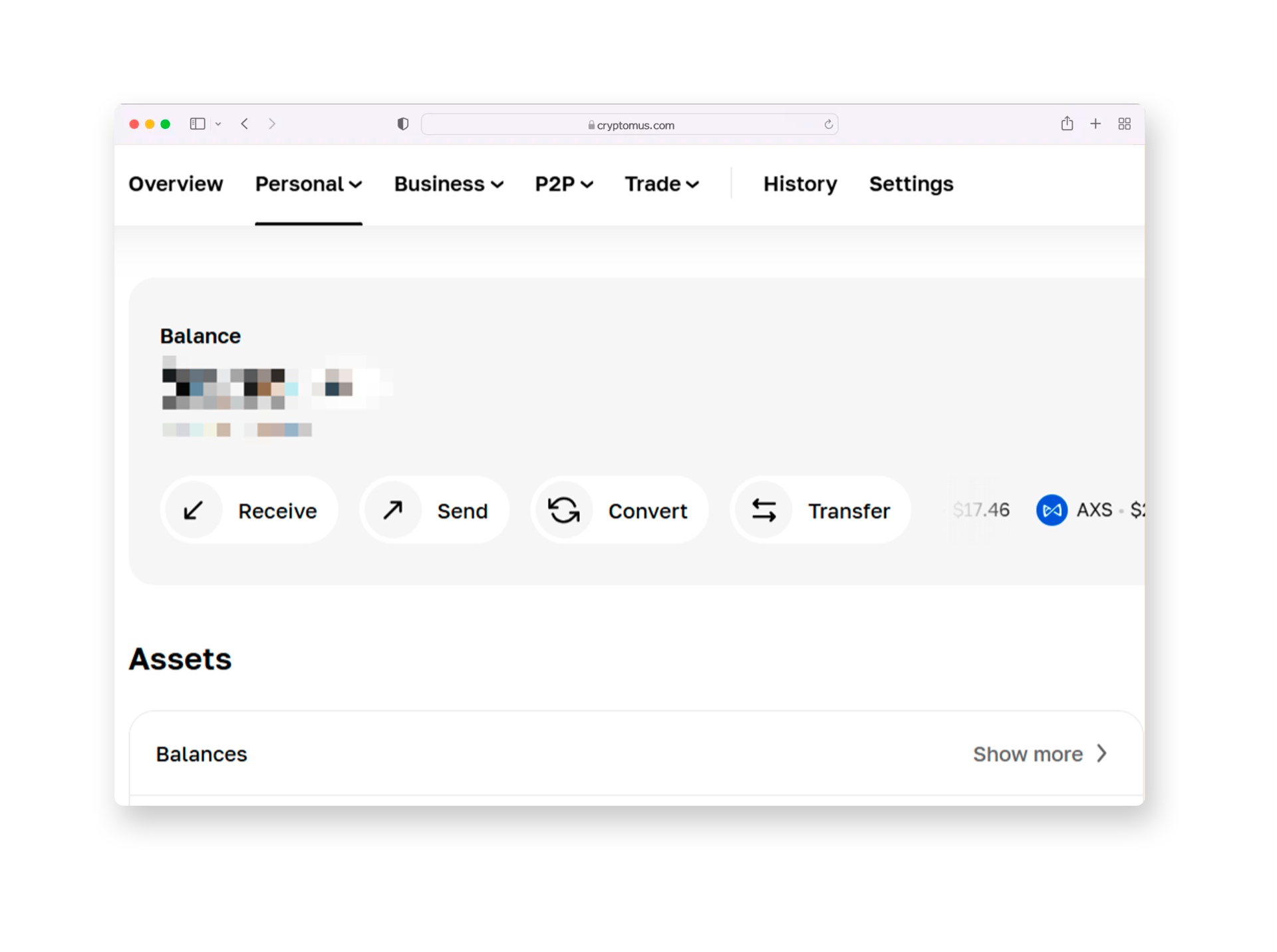
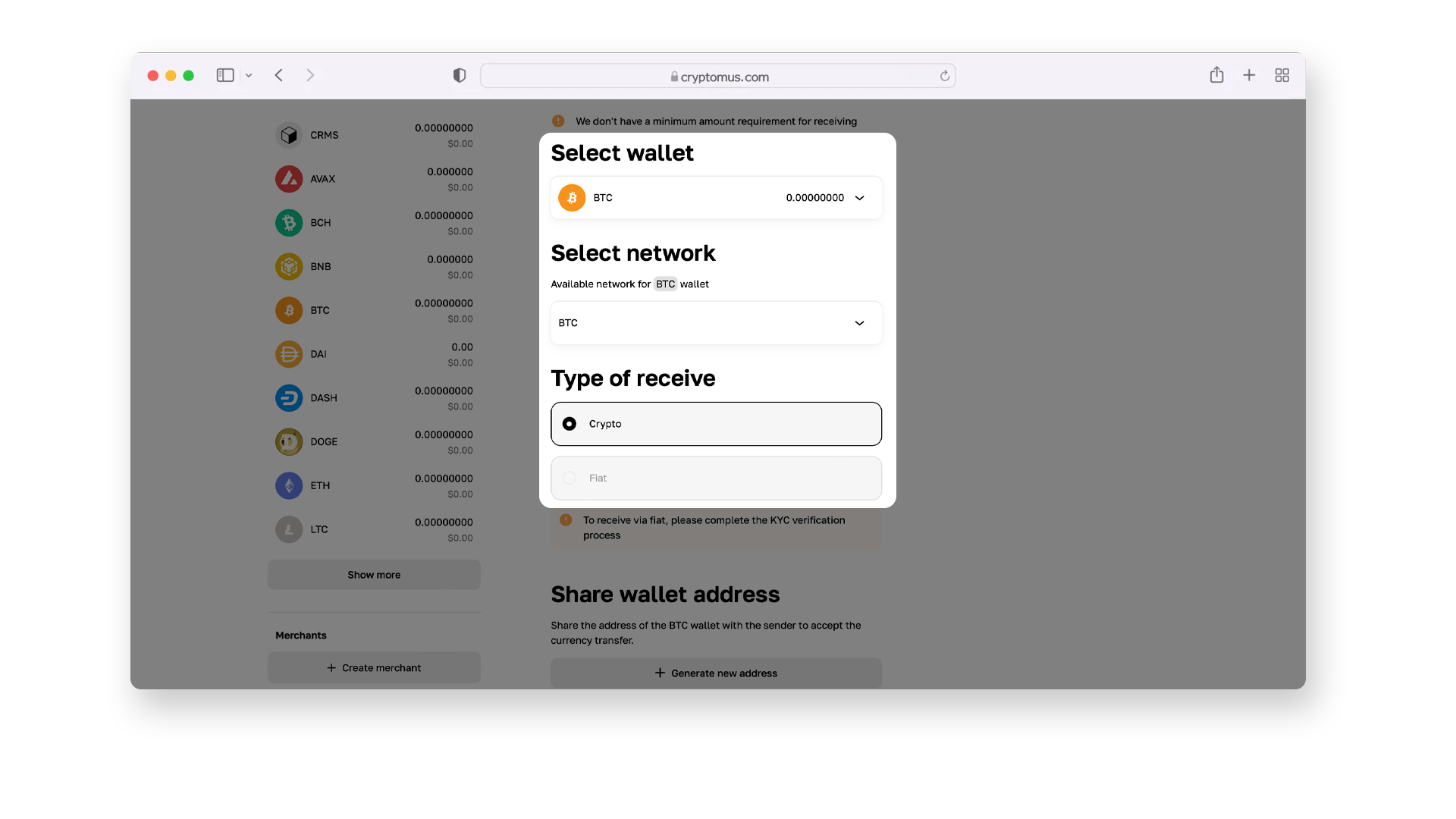
- Click on the button and go to a new menu. Here you need to select a crypto wallet and choose the available network and type of receive;
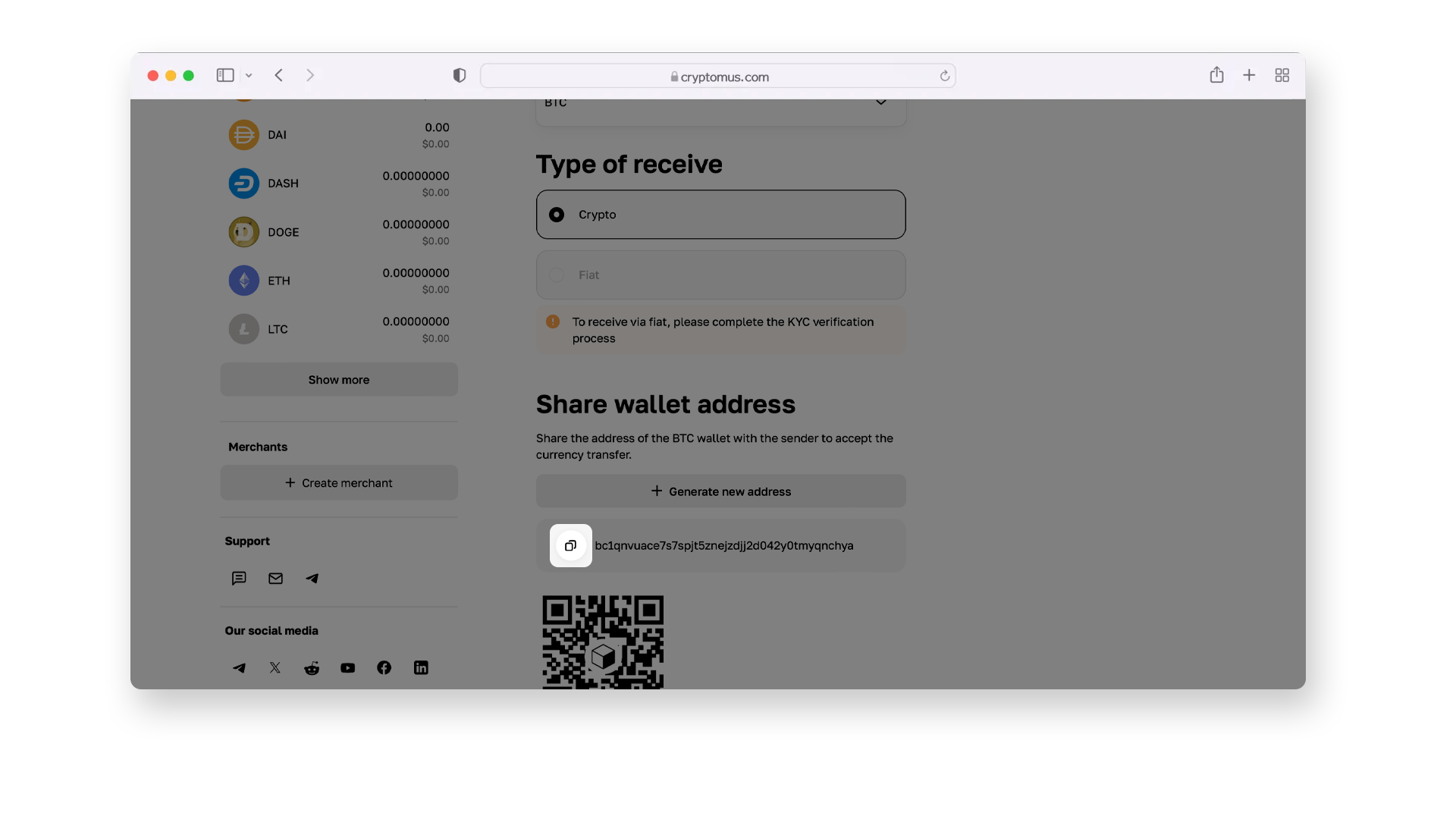
- As soon as you fill in all the filters, at the very bottom, you will find your address in a special field. Get the wallet address and share it with the sender to accept the cryptocurrency transfer. You can either simply copy the wallet address or share it using a QR code.
Understanding the basis of the withdrawal process is essential for anyone participating in the world of cryptocurrencies. As you continue your journey in the crypto space, remember to always secure your wallet by enabling 2FA and coming up with a strong password to protect your digital assets.
We hope this article has helped you understand what a withdrawal address is. Feel free to leave the comments!



Simplify Your Crypto Journey
Want to store, send, accept, stake, or trade cryptocurrencies? With Cryptomus it's all possible — sign up and manage your cryptocurrency funds with our handy tools.
Get Started