
Daniel Brooks
Crypto expert turning complex theory into clear guides.
What Is a Wallet Address and How Do I Find It?
If you've ever sent cryptocurrency to someone, you know that it requires entering a crypto wallet address. To receive digital funds in your wallet, you'll also need a wallet address—this time your own, which you'll share with the other person. This can be confusing, so we've decided to explain in more detail what a crypto wallet address is and where to find it. Keep reading to find out!
What Is the Wallet Address Needed for?
A crypto wallet address is a unique wallet identifier that consists of Latin letters and numbers. It is specific information that the user can freely provide to other people, used to receive cryptocurrencies from other crypto holders.
In short, a crypto wallet address serves two purposes: identification and transaction tracking. Each wallet address is unique and is created as soon as you register with the app of the provider. Moreover, the wallet address can also be used to track transaction status in specialized blockchain explorers (for example, transactions on Ethereum with EtherScan).
For each network the address is unique, so it is very important to double-check the address, as an error in even one character can lead to loss of funds. It's also important to know that a single address can be used to receive multiple tokens. For example, for Tron (TRX) and USDT TRC-20 on the TRON network, it will be the same. For EVM blockchains such as Ethereum, Binance Chain, Avalanche, and Polygon, and their tokens (e.g., USDT ERC-20, AVAX, etc.), you will also be assigned a single address.
 The best custodial wallet for beginnersManage crypto with a user-friendly interface, convenient funding options, and a wide set of tools for everyday use.
Examples of Wallet Addresses
As we’ve already mentioned, the basic wallet address consists of a number of letters and numerals. The exact number of characters depends on the blockchain the coin is linked to, but most often its length does not exceed 50 characters. Here are some examples of wallet addresses on the Bitcoin, Ethereum, and TRON networks:
-
Bitcoin: ‘1njrRcKQtfjjLuQxFYCeMXcth77m5TAYo’. BTC addresses are 26-35 characters long and may begin with "1", "3" or “bc1”.
-
Ethereum: ‘0x71C7656EC7ab88b098defB751B7401B5f6d8976F’. Addresses on the Ethereum blockchain are 42 characters long and begin with “0x”.
-
TRON: ‘TPAe77oEGDLXuNjJhTyYeo5vMqLYdE3GN8U’. Addresses on the TRON blockchain are 34 characters long and begin with “T”.
How Do I Find My Wallet Address?
To get a crypto wallet address, you first need to register on the specific crypto wallet provider’s website or app. At this point, your crypto wallet will be created automatically, and the address will change depending on the blockchain network used.
One reliable option is the Cryptomus wallet. Here, your funds are protected thanks to 2FA, strong encryption, and the ability to set a complex password. Cryptomus supports over 120 coins across various blockchains, making the platform suitable for both beginners and experienced crypto holders who want to explore new assets.
Let’s see how to do this using the example of the Сryptomus platform:
-
Create your Cryptomus wallet if you don’t have one;
-
Click on the “Receive” button in your personal account and choose your preferred currency;
-
Select a specific blockchain network through which the transaction will be performed;
-
If necessary, select the type of receive.
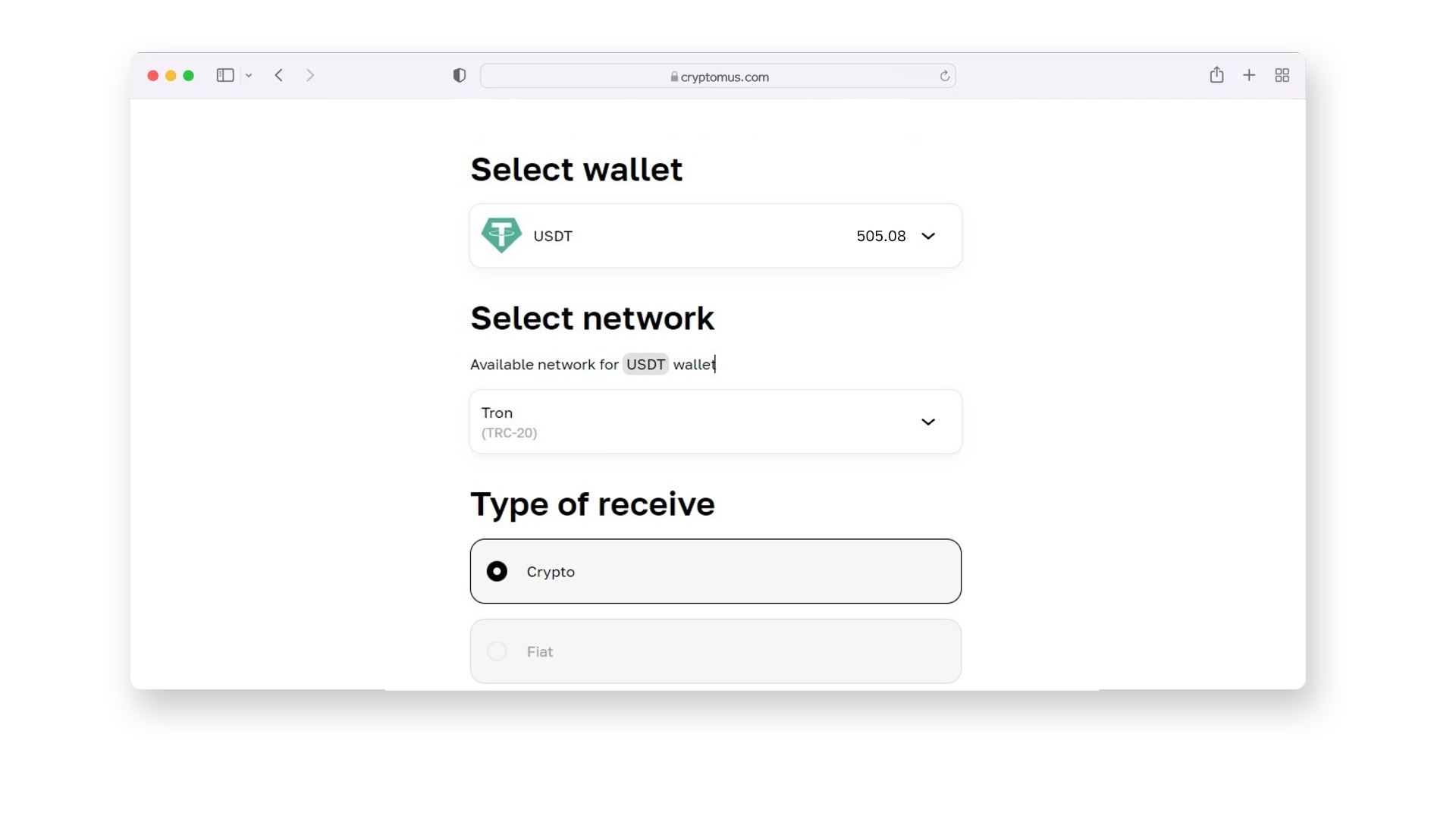
Then, you may automatically see the option “share wallet address” below. There you can find your own address, which you may copy and send to the person who wants to make a transfer to you.
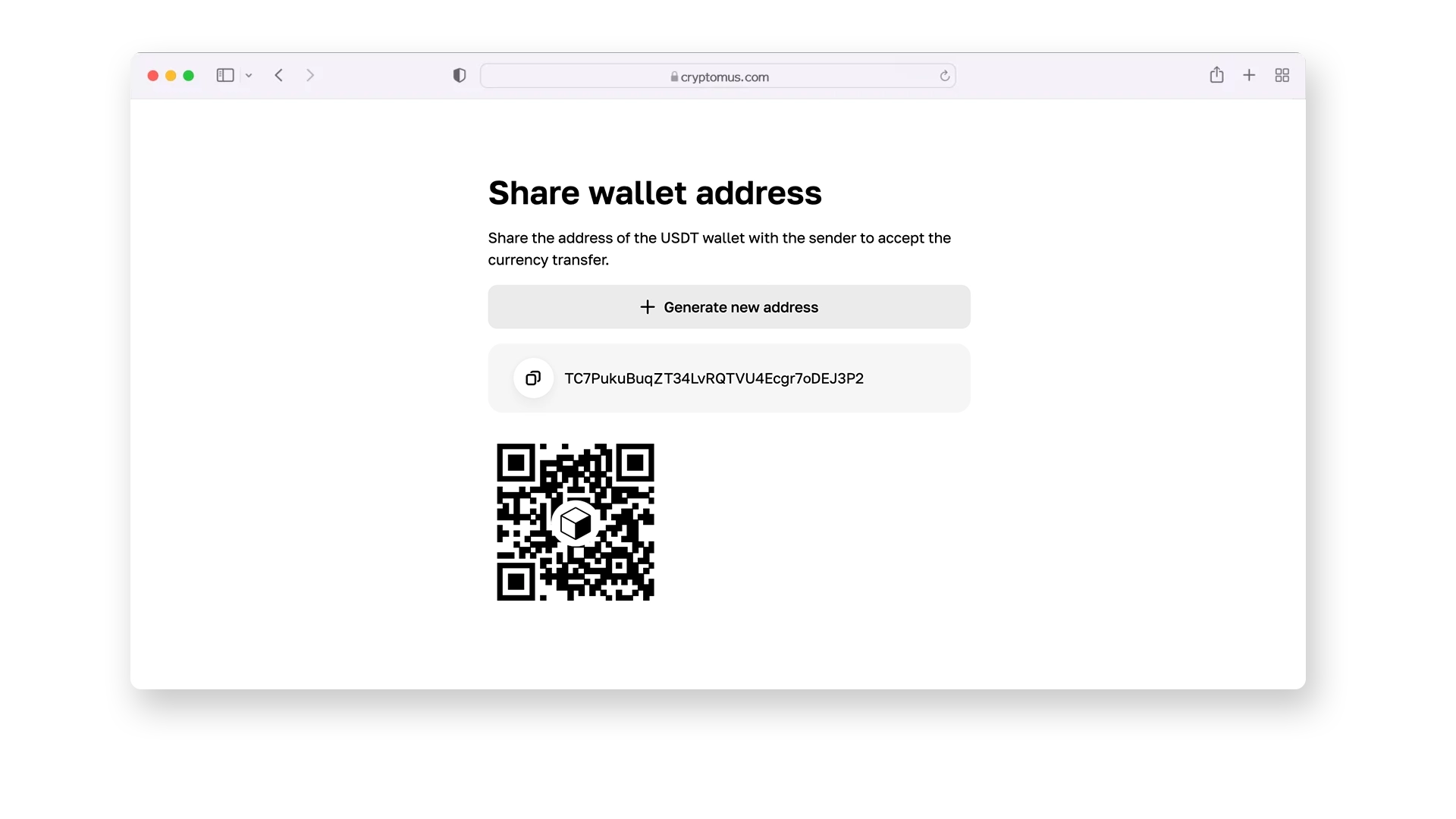
By the way, there you can also generate a new wallet address but be careful. Your current address won’t be available if you generate a new one.
How Do I Use My Wallet Address?
You may use the address of the cryptocurrency wallet to send and receive crypto by providing someone your wallet address when you wish to receive the digital assets from them so they can send you money. In a similar vein, you also require the recipient's wallet address when sending cryptocurrency to them; make sure you have selected the correct network.
On many platforms, you may find such a wallet address feature as providing a QR code with your wallet address data. It makes sharing the address with other users much easier.
We hope this article gives you the answers about a crypto wallet address. Make transactions in the most convenient way together with Cryptomus!


