

David McMillan
Crypto-enthusiast who explores all the possibilities the blockchain technology suggests
Most Popular Bullish Patterns in Trading
Table of Contents
There are many different concepts in crypto trading that may seem difficult to understand at first. Have you ever wondered what bullish patterns are and why traders always talk about them? In this article, we answer these questions, giving examples of the most popular patterns and methods for using them.
What Is a Bullish Pattern in Trading?
A bullish pattern is a candlestick chart pattern that shows sellers losing strength and buyers starting to push the price up. Simply put, it's a visual clue that the market may stop falling and start rising. Such patterns help you understand when it's worth considering buying in, because it's often where a trend reversal or a new upward movement begins.
List of Most Popular Bullish Patterns
In crypto trading, there are many bullish patterns used for market analysis. We've gathered a top 5 of the most common and frequently used ones:
-
Bullish Engulfing;
-
Hammer;
-
Morning Star;
-
Piercing Line;
-
Three White Soldiers.
Next, we will examine each of them separately so that you can better understand what these patterns represent.
Bullish Engulfing
A bullish engulfing pattern is a candlestick pattern consisting of two candles that indicates a sharp shift in momentum toward buyers. First, a red candlestick forms, reflecting a falling price, and then a large green one appears, completely covering the body of the red. This pattern indicates that buyers have entered the market much more actively than sellers and have managed to reverse the trend.
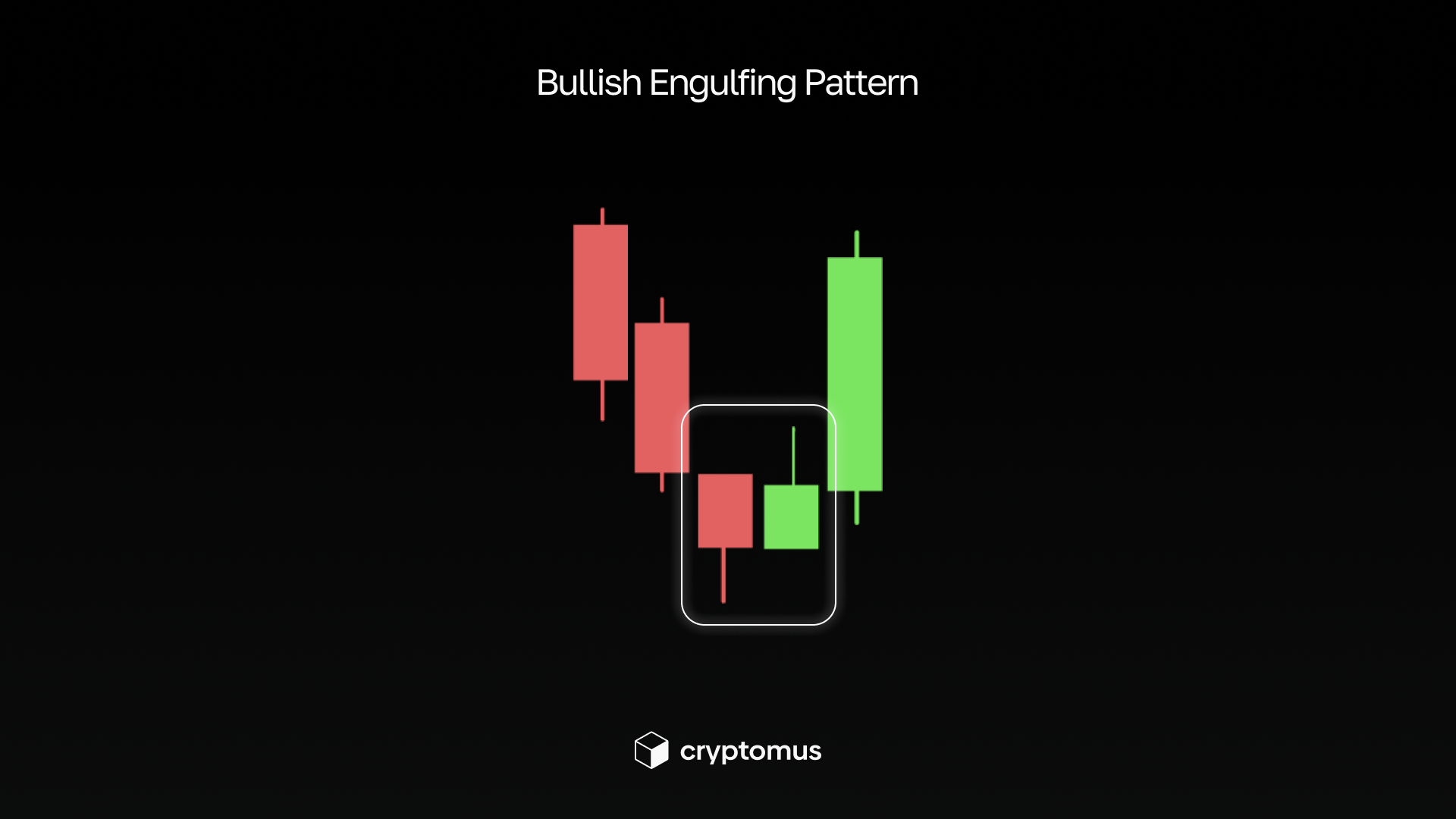
Traders often see this pattern as a signal of the possible start of growth or a confident rebound. Additional confirmation in the form of increased volumes makes the signal more reliable and helps to distinguish a real reversal from a random price fluctuation.
Hammer
A hammer is a single bullish candlestick pattern that appears after a decline and indicates a possible upward reversal. It looks like a candlestick with a small body at the top and a long lower shadow. This shape shows that sellers tried to push the price down strongly, but buyers bought the dip and brought the price back closer to the opening level.
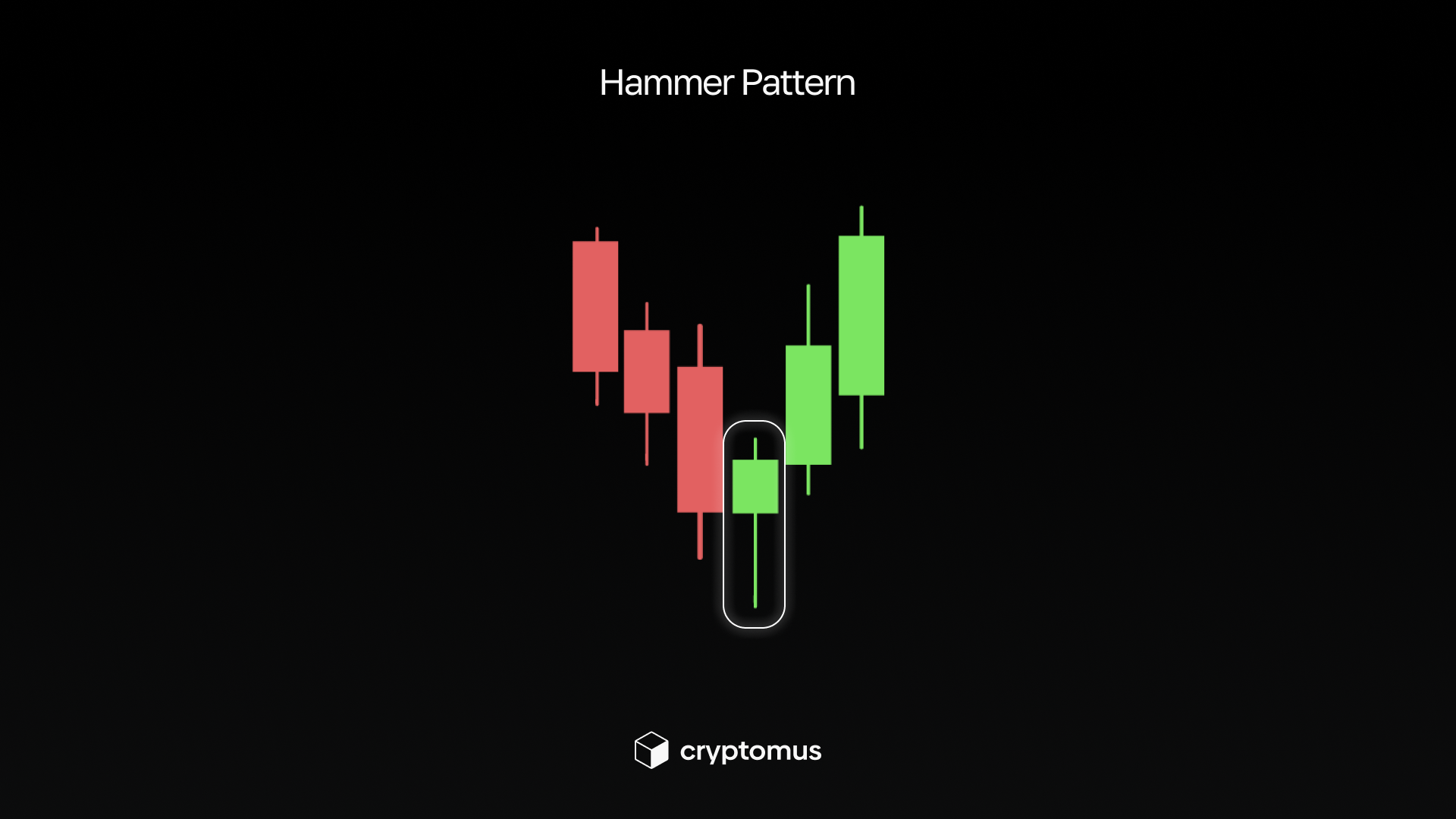
The hammer shows that the seller pressure is weakening and buyers are beginning to show activity. The pattern becomes more reliable if it forms at the support level and is accompanied by an increase in volume. That helps to understand that buyers are really defending the level and are ready to move the price higher.
Morning Star
The morning star is a three-candlestick bullish pattern that forms after a long decline and indicates a gradual weakening of sellers and a shift in power to buyers. First, a large red candlestick appears, reflecting strong downward pressure. Then a small candlestick forms, indicating a halt in movement and uncertainty. The third candlestick—a large green one—closes above the middle of the first candlestick, confirming a change in market sentiment.
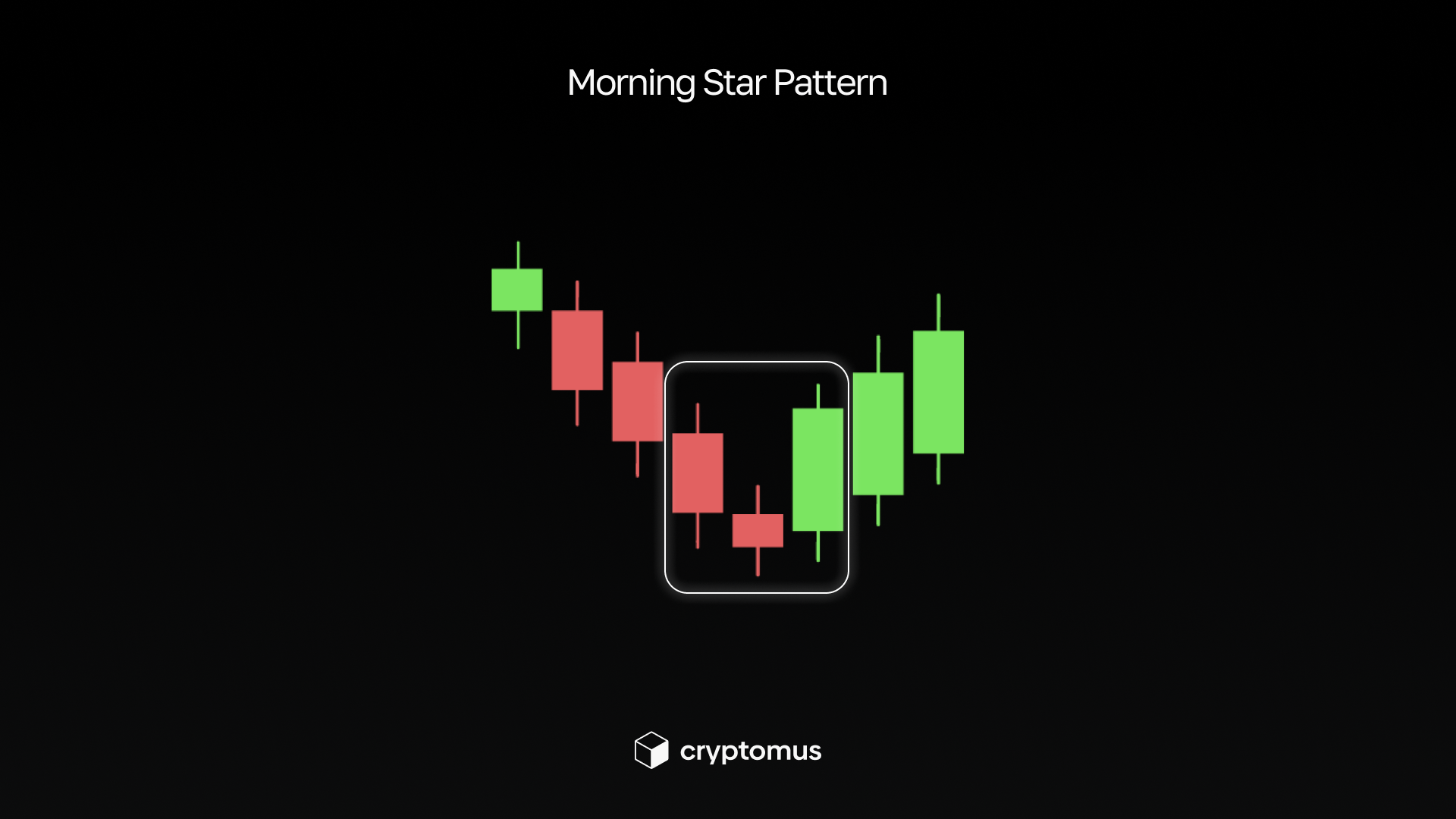
This combination of three candlesticks indicates that sellers can no longer continue the decline, and buyers are confidently pushing the price back up. The morning star becomes a particularly strong signal if it appears near the support level and is accompanied by an increase in volume on the third candle—this emphasizes a real reversal and the emergence of sustained demand.
Piercing Line
A piercing line is a two-candlestick bullish pattern that appears after a decline and indicates that buyers are beginning to regain control over the price. The first candlestick in the pattern is red and falling, reflecting continued pressure from sellers. The green candlestick that follows opens below the previous low but closes above the middle of its body. This movement shows that buyers were able to reverse the decline and actively push the price up.
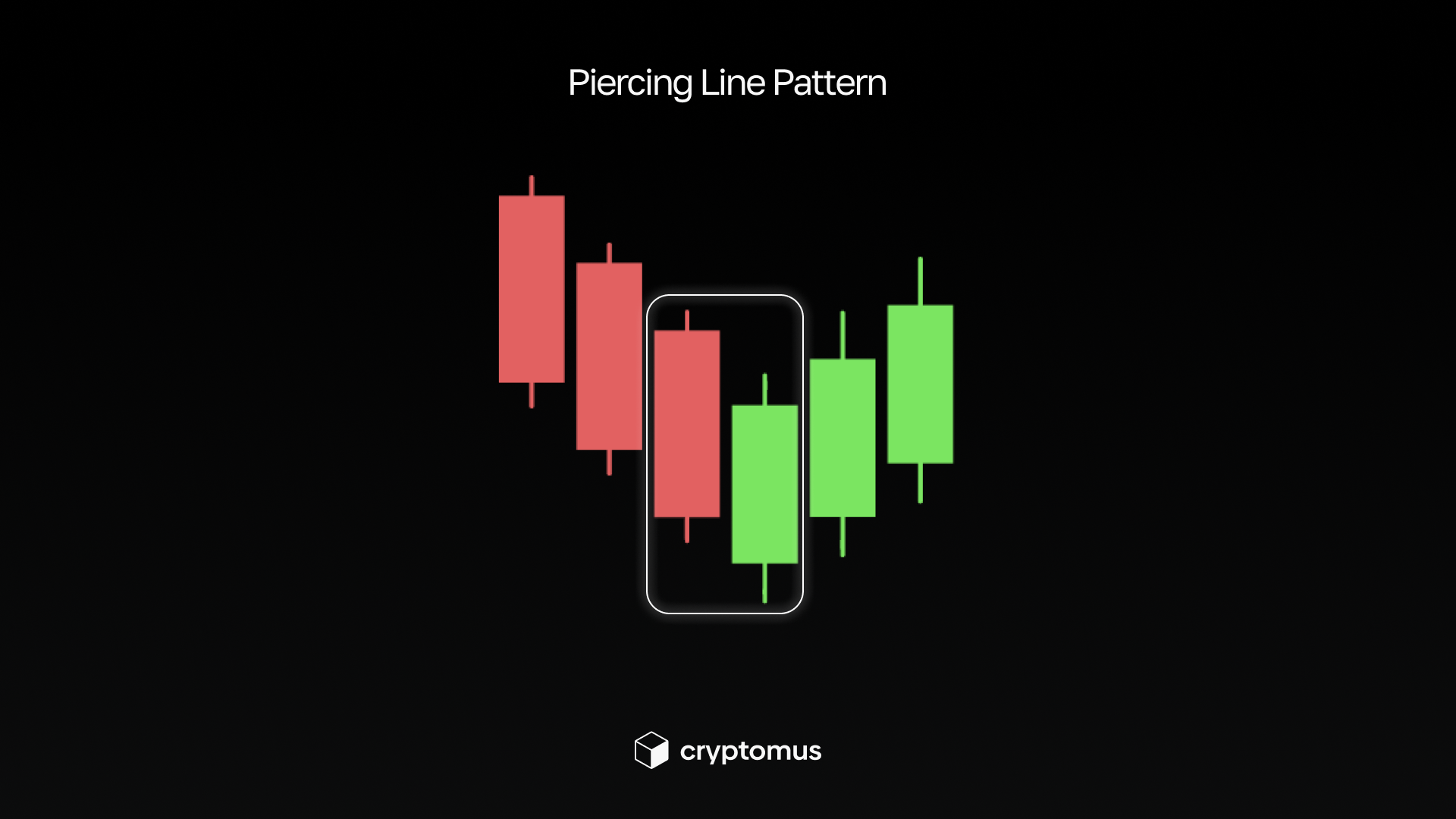
Traders often see this pattern as an early signal of a reversal, especially if it forms at a strong support level. Additional factors, such as increased volume or a subsequent bullish candle, increase the reliability of the pattern and help to distinguish a real reversal from a short-term rebound.
Three White Soldiers
Three white soldiers is a strong bullish reversal pattern of three consecutive long green candlesticks. It appears after a period of decline or prolonged uncertainty and indicates that buyers are confidently and consistently taking control of the market. Each subsequent candlestick usually opens inside the body of the previous one and closes above its high, highlighting a steady increase in demand.
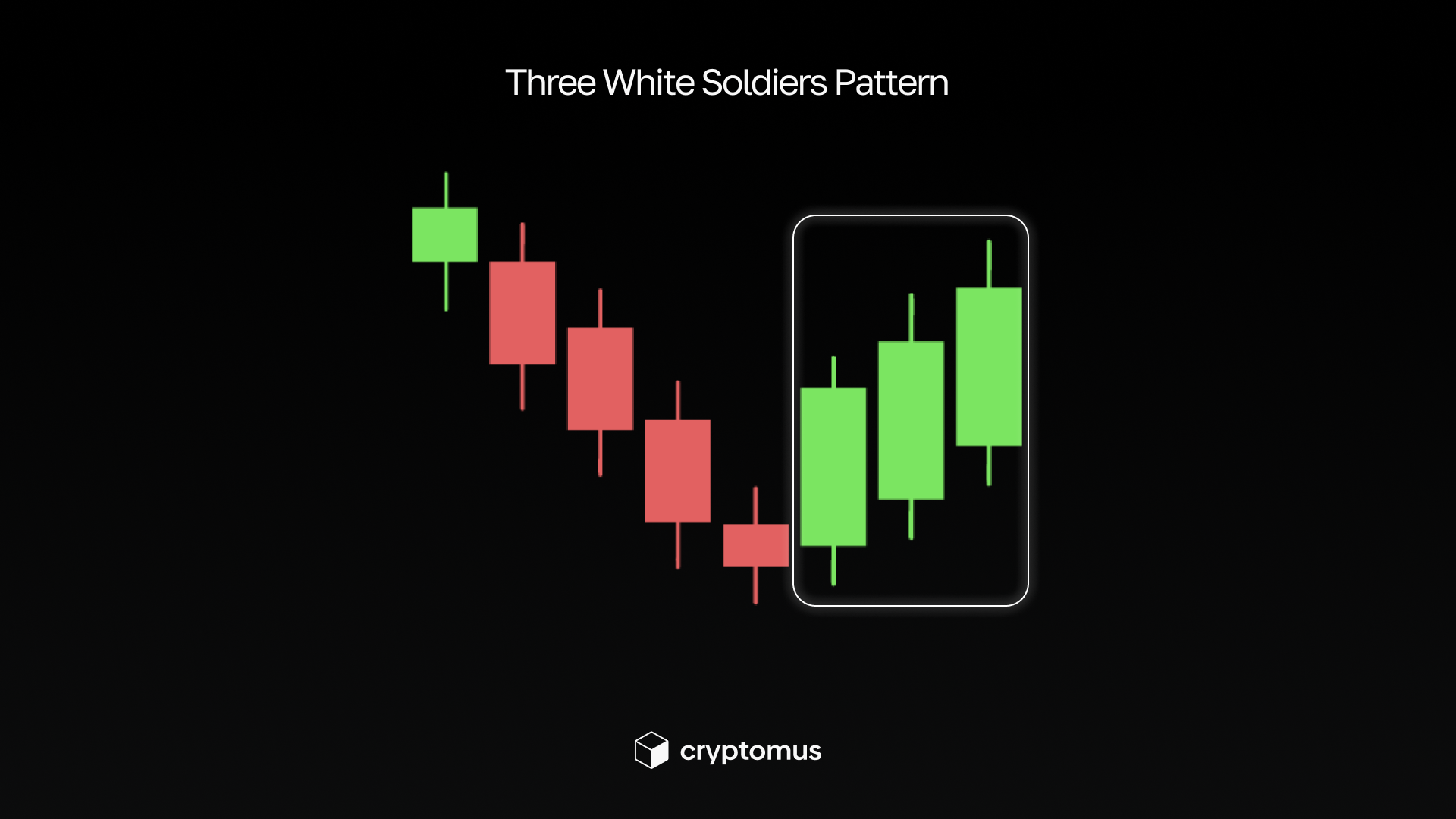
This pattern often means confirmation of the start of a new uptrend. It's considered particularly reliable when it forms after a prolonged decline and is accompanied by an increase in volume. However, you need to be careful with too many consecutive candles: sometimes it can be the result of a short-term “overheating” of the price.

How to Use Bullish Patterns in Trading?
Bullish patterns help traders understand where the market is heading. So, they are used to:
-
Determine the entry point. Bullish patterns help to understand where the market may stop falling and start turning upward. If such a pattern appears after a decline and near the support level, it often becomes a convenient entry point.
-
Confirm growth. Before entering, it's important to wait for confirmation—for example, the next green candle or an increase in volume. This shows that buyers are really active and the signal is not accidental.
-
Set stop losses. After the pattern appears, traders usually set stop losses slightly below the nearest low. This helps to limit losses if the market continues to fall.
-
Assess the overall trend. Bullish patterns work better when the overall market background doesn't contradict them. If the overall trend is upward, such signals become more reliable.
-
Combine with other indicators. Indicators such as RSI, MACD, or volume help to understand whether there is real support for the movement. If both the pattern and the indicators point upward, the signal becomes stronger.

So, bullish patterns are not billboards screaming “Buy!” or “Sell!” They merely reflect market movements and, in many cases, predict the development of trends that have already begun. Therefore, it's important for traders to recognize these patterns and interpret them correctly and reinforce them with more accurate analytical data to decide how to act.
What other bullish patterns do you know? Have you ever used them? If so, when and how? Let's discuss it!







Simplify Your Crypto Journey
Want to store, send, accept, stake, or trade cryptocurrencies? With Cryptomus it's all possible — sign up and manage your cryptocurrency funds with our handy tools.
Get Started