
Julian Thorne
Crypto analyst and guide author. Making complex technologies clear for everyone.
What is a Volatility in Trading
Table of Contents
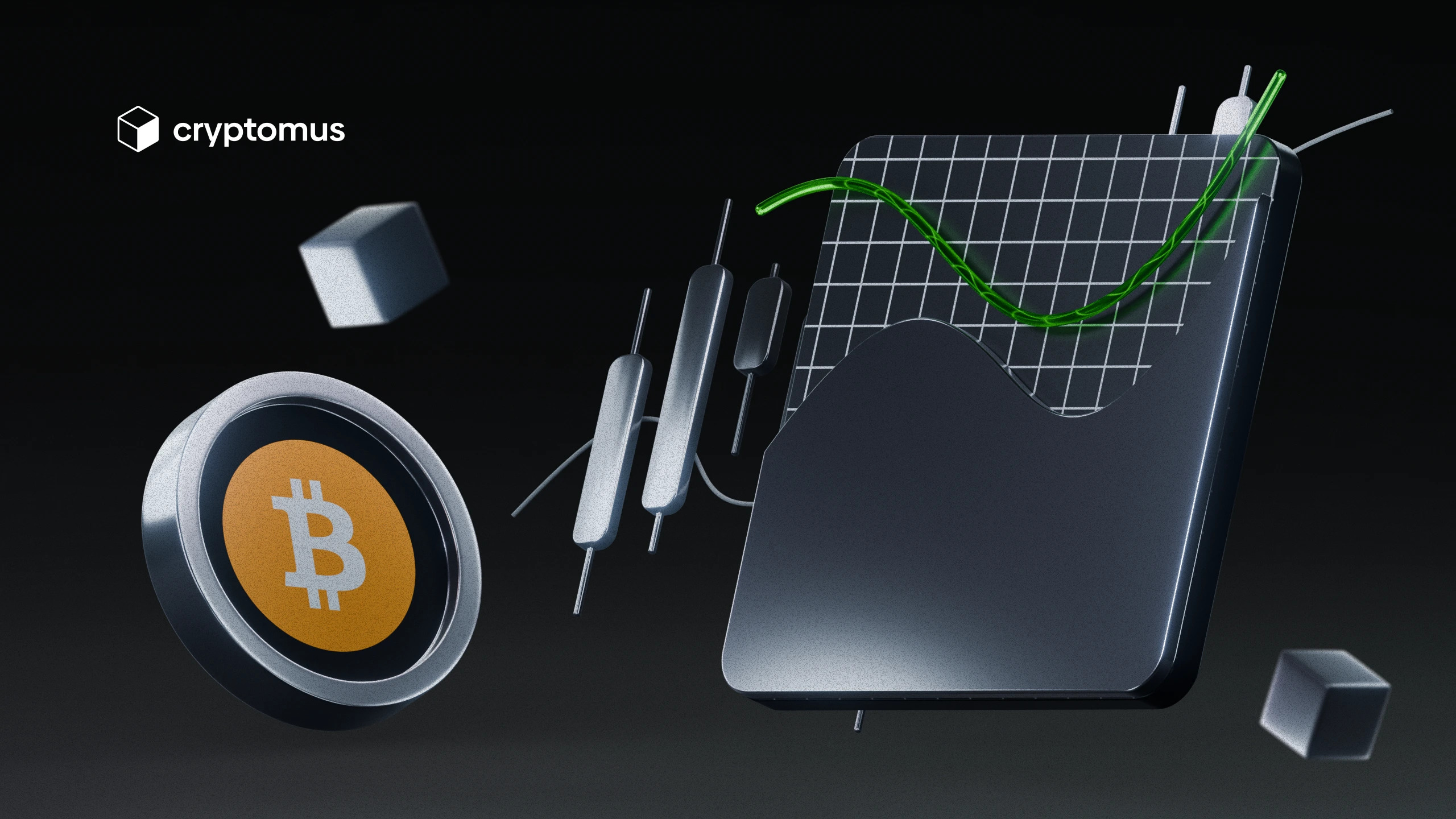
Volatility is a measure of price variability. Think of an asset's price as a pendulum: the faster and more forcefully it swings, the higher the volatility. This phenomenon can be both a source of huge profits and a cause of serious losses. Later in this article, we will discuss in more detail what volatility is and what strategies there are to profit from it.
What Is Volatility?
Cryptocurrency volatility is defined as extreme and rapid price fluctuations. It is driven by structural factors: the relative immaturity of the market, its low liquidity, and the fact that prices are driven largely by market sentiment, rumors, and speculation rather than by economic fundamentals.These factors create a unique, high-risk environment where prices can change by tens of percent in a matter of hours.
For some people (such as long-term investors) high volatility signifies increased risk, especially for those prone to panic selling. You don't like it when your portfolio can lose a significant amount of value in a single day. But for active traders, volatility is a key earning tool because it creates trading opportunities: they buy when the price is low and sell when it's high, exploiting these fluctuations.
High Volatility Vs. Low Volatility
The choice of strategy directly depends on the “temperament” of the market and its volatility: some methods work better in calm waters, while others are more effective in the midst of a storm.
High Volatility
High volatility is ideal for those looking to profit from rapid movements. This is excellent for those who prefer trading short-term — for example, using the following strategies:
-
Scalping. This involves catching the smallest price movements. Traders make dozens or even hundreds of trades a day, taking a tiny profit on each one. Here, reaction speed and a lack of emotion are critical.
-
Day trading.** All trades are opened and closed within one day, but unlike scalping, there are not as many of them. Traders do not leave positions open overnight so as not to be affected by news that may come in while they are asleep.
-
Margin trading. It is also known as using leverage (borrowing funds from the exchange). This allows you to trade amounts that exceed your personal capital many times over, greatly increasing both your potential profits and the risk of quickly losing all your money.
-
Arbitrage. This refers to earning money on the difference in prices for the same coin on different exchanges. The trader buys the asset where it is currently cheaper and immediately sells it on another platform where the price is higher.
-
Trading bots. Because fluctuations in the crypto market occur so quickly, manual trading often fails to keep up. Automation (bots) helps execute trades instantly and eliminates the emotional factor.
Low Volatility
Long-term investors welcome low volatility, as it guarantees the absence of sharp fluctuations and is focused on stability and growth over many years:
-
Long-term holding (HODL). Investors believe that over the long term, most temporary price fluctuations smooth out, and the overall market trend is always upward.
-
Portfolio diversification. This protects against sharp declines. Capital is distributed across different asset classes, from high-risk altcoins to more stable instruments.
Crypto Volatility Index
Volatility is an indicator of how much an asset's price deviates from its average value: the wider the “swings”, the higher the risk is considered to be. To understand the situation, investors look at two types of volatility: historical volatility, which analyzes actual price swings in the past, and implied volatility, which reflects expectations of future fluctuations based on option prices. In essence, it is a mathematical measure of market uncertainty that helps to assess the possible range of an asset's return.
To understand what to expect from the market in the future, financiers use expected volatility indices. In traditional finance, the VIX (Volume Index) measures expected volatility in the stock market over the next 30 days. In the crypto market, the equivalent of this instrument is the Crypto Volatility Index (CVI).
The CVI measures expected volatility based on the prices of options contracts on major cryptocurrencies, such as Bitcoin and Ethereum. If the CVI index rises, it signals that the market as a whole expects strong and sharp price movements in the near future. Conversely, a decline in the CVI indicates that the market is calming down and participants are expecting more stable and predictable price movements without sharp fluctuations.
You can track volatility indicators on the following resources:
1. cvi.finance — the official index platform, which displays the level of “fear” in the crypto market in real time and provides decentralized tools for insuring your portfolio against sharp fluctuations.
2. Investing.com — a global financial portal that provides convenient CVI charts and technical analysis tools to assess whether the market is calming down or preparing for a new storm.
3. Crypto exchanges — some large platforms also offer their own benchmarks and calculate volatility indices for Bitcoin, Ethereum, Solana, XRP, and other cryptocurrencies.
Top-5 Volatile Cryptocurrencies
To understand how prices change, it is important to look not only at the numbers, but also at the reasons for these fluctuations. Below, we will discuss five key coins that set the tone for the market.
Solana (SOL)
This blockchain is designed for ultra-high speed and scalability. SOL's volatility is often fueled by developments in its ecosystem: the popularity of NFT marketplaces, Web3 gaming applications, and the influx of new users. Technical news about the network's performance and the introduction of innovations also have a strong impact on the price.
Chainlink (LINK)
As a link between blockchains and real-world data, LINK is extremely sensitive to news about major partnerships. Its volatility is largely determined by the implementation of the CCIP protocol and cooperation with giants such as SWIFT and BlackRock. Any shifts in the field of real asset tokenization (RWA) are instantly reflected in the price of this coin.
Monero (XMR)
The leading anonymous cryptocurrency. Its volatility is specific in nature and often linked to regulatory pressure. News of delisting from major exchanges or bans in certain regions can cause sharp fluctuations, although Monero's secure architecture often helps the coin remain stable despite market panic.
Bitcoin Cash (BCH)
This project focuses on using cryptocurrency as “electronic money” for everyday payments. The BCH exchange rate largely depends on the rate at which merchants around the world accept the coin. Periodic network updates (such as the Velma hard fork) and halving cycles, which reduce the issuance of new coins and create a supply shortage, are also important factors in volatility.
PEPE coin (PEPE)
A prominent representative of meme tokens. Its volatility is almost entirely driven by hype and attention from the social media community. Since the coin has no complex technical basis or real collateral, its price can skyrocket by hundreds of percent in a matter of days amid news of listings or online discussions, and fall just as rapidly.
Other popular memecoins, such as DOGE and SHIB, are also worth mentioning. They are very popular with traders, but they have no fundamental use — they were originally created as a joke. Due to their “empty” nature, such tokens can skyrocket by hundreds of percent simply on the wave of hype or after a single tweet from a famous person, and just as quickly collapse to zero. Their volatility is pure crowd psychology and speculation.
There is a clear pattern here: if a cryptocurrency is part of a large system (application, or useful service), its price directly depends on the life of that project. Knowing the update schedule or launch dates for new features, experienced traders can predict in advance when a coin will start to “storm”.
Volatility is an inherent feature of the crypto market, which determines its high returns and, at the same time, high risks. The key to success in this environment is not trying to avoid volatility but rather learning to measure and leverage it.
We hope this article helped you understand what volatility is, how to monitor it, and how to use it to your advantage. If you have any questions, please ask them in the comments!




Simplify Your Crypto Journey
Want to store, send, accept, stake, or trade cryptocurrencies? With Cryptomus it's all possible — sign up and manage your cryptocurrency funds with our handy tools.
Get Started